


Introduction
Modern networking systems rely heavily on proper device identification and secure communication. Whether in homes, offices, educational institutions, or large business environments, every connected device needs a unique identity to communicate with routers, servers, and other network hardware. This identity is commonly known as the MAC address. Managing these addresses manually can become difficult, especially when multiple devices are connected to the same network. This is where tools and platforms designed for network administration become extremely useful.
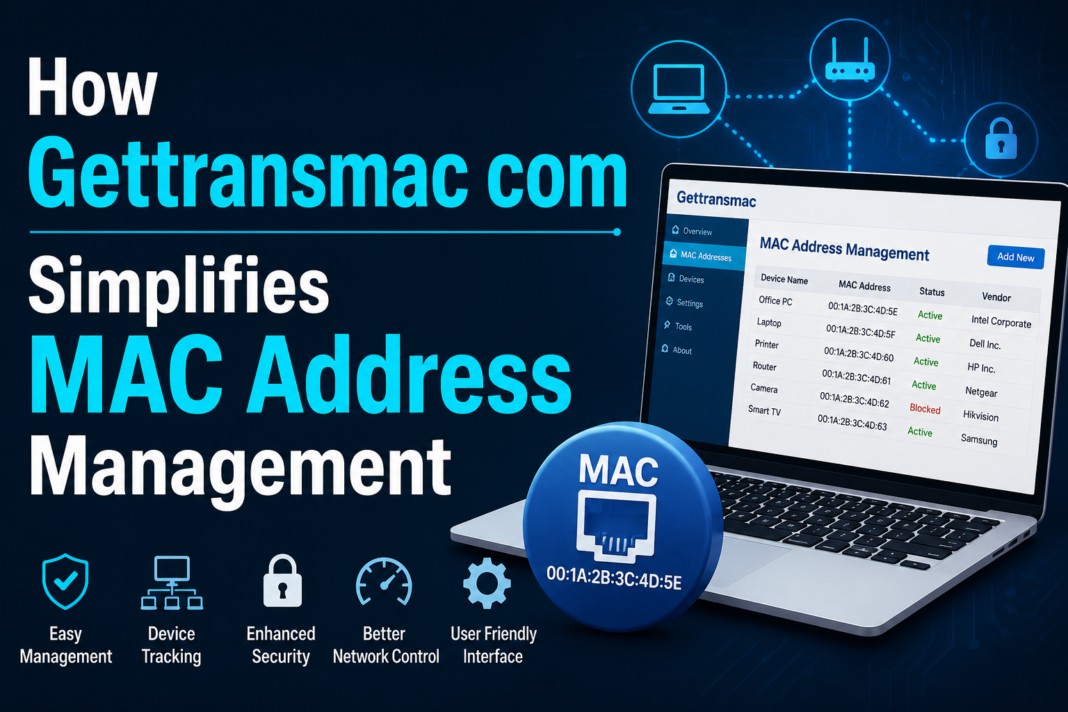
One platform that has gained attention among users interested in device configuration and network management is Gettransmac com. The platform is widely discussed for its role in simplifying processes associated with MAC address handling, USB formatting, and system compatibility tasks. As networks continue to grow in complexity, solutions that streamline administrative tasks are becoming increasingly important for both professionals and everyday users.
Understanding MAC addresses may seem technical at first, but they are essential for device communication. Every smartphone, laptop, gaming console, printer, smart TV, and router includes a unique MAC address assigned by the manufacturer. These identifiers help networks recognize devices and ensure proper data transmission. However, managing dozens or even hundreds of MAC addresses manually can lead to confusion, errors, and inefficiency.
This article explains how MAC address management works, why it matters, common challenges users face, and how Gettransmac com helps simplify the process. The discussion also covers security, device tracking, compatibility management, troubleshooting, and future networking trends. By the end of this guide, readers will gain a clear understanding of why efficient MAC address management is important in today’s connected world.
Understanding MAC Addresses
A MAC address, also known as a Media Access Control address, is a hardware identifier assigned to a network interface card. It is designed to uniquely identify devices within a network. Unlike IP addresses, which can change depending on network configuration, MAC addresses are generally fixed and embedded into hardware.
A typical MAC address contains twelve hexadecimal characters separated into pairs. For example:
00:1A:2B:3C:4D:5E
Each connected device uses this address for communication at the data-link layer of networking. Routers and switches rely on MAC addresses to deliver data packets to the correct destination.
Key Functions of MAC Addresses
- Device identification within local networks
- Communication between network hardware
- Network access control and filtering
- Security monitoring and authentication
- Device tracking and troubleshooting
Because of these functions, effective MAC address management is necessary in both personal and professional networking environments.
Why MAC Address Management Matters
As the number of internet-connected devices increases, managing network identities becomes more difficult. Smart homes now contain multiple devices such as voice assistants, streaming systems, cameras, laptops, and gaming consoles. Businesses often operate hundreds of connected devices across departments and locations.
Without organized MAC address management, networks may experience:
- Device conflicts
- Unauthorized access
- Security vulnerabilities
- Difficulty troubleshooting issues
- Slow network performance
- Administrative confusion
Efficient management allows administrators to identify devices quickly, apply access rules, and maintain secure communication channels.
Common Challenges in MAC Address Management
Although MAC addresses are essential, handling them manually presents several challenges.
1. Large Number of Devices
Modern environments include dozens or even hundreds of connected devices. Keeping track of every MAC address manually is time-consuming and error-prone.
2. Device Authentication Issues
Organizations often use MAC filtering for network security. Incorrect entries may block legitimate devices or allow unauthorized access.
3. Troubleshooting Complexity
When network problems occur, administrators must identify affected devices quickly. Poor management systems slow down troubleshooting processes.
4. Compatibility Problems
Some systems require specific formatting or device recognition methods. Compatibility errors can create installation and connectivity issues.
5. Human Error
Typing long hexadecimal addresses manually can easily result in mistakes, leading to connectivity failures and confusion.
These challenges explain why users look for tools that simplify network and device management tasks.
The Role of Gettransmac com in Device Management
Gettransmac com is often associated with simplifying technical processes related to storage drives, system compatibility, and device management. Users frequently explore it for handling USB formatting tasks and improving compatibility between operating systems.
One important advantage discussed by users is how the platform contributes to organized management practices. Rather than relying on complicated manual configurations, users can streamline processes and reduce setup difficulties.
The platform is especially useful for people working with:
- Multiple storage devices
- Cross-platform environments
- Device configuration tasks
- Technical troubleshooting
- USB installation systems
By simplifying these technical procedures, Gettransmac com reduces the complexity often associated with managing connected hardware.
How Simplified MAC Address Management Improves Productivity
Network administrators and everyday users benefit greatly from simplified systems. Proper management improves productivity in several ways.
Faster Device Identification
When devices are properly organized, administrators can instantly identify hardware connected to a network. This reduces downtime and improves operational efficiency.
Easier Network Monitoring
Efficient management systems allow users to track activity across connected devices. Monitoring helps identify unusual behavior or unauthorized access attempts.
Reduced Technical Errors
Automation and organized management reduce manual typing errors. This minimizes connectivity problems and configuration issues.
Better Security Control
MAC filtering and device authentication become easier to manage when systems are properly documented and maintained.
Simplified Troubleshooting
When issues occur, administrators can quickly locate affected devices and resolve problems efficiently.
MAC Address Filtering and Security
One major use of MAC address management is network security. Many routers and enterprise systems allow administrators to create filtering rules based on MAC addresses.
What Is MAC Filtering?
MAC filtering is a security feature that controls which devices can connect to a network. Approved MAC addresses are added to a whitelist, while unknown devices are blocked.
Benefits of MAC Filtering
| Feature | Benefit |
|---|---|
| Device Authentication | Allows only approved devices to connect |
| Unauthorized Access Prevention | Blocks unknown devices |
| Improved Monitoring | Tracks device activity |
| Better Network Control | Helps manage bandwidth and permissions |
| Security Enhancement | Adds an additional protection layer |
Although MAC filtering is not a complete security solution, it adds another barrier against unauthorized access.
Simplifying Cross-Platform Compatibility
Many users face compatibility problems when switching between operating systems such as Windows and macOS. Device formatting and recognition issues can complicate tasks involving USB drives and installation media.
Platforms like Gettransmac com help simplify compatibility-related tasks by assisting users in handling system-specific formatting processes more effectively.
Common Compatibility Challenges
- Unsupported file systems
- Drive recognition errors
- Bootable USB creation issues
- Data accessibility problems
- Formatting inconsistencies
Simplified management tools reduce the learning curve and make technical tasks more accessible to beginners.
The Importance of Organized Network Documentation
Good network management depends heavily on proper documentation. Administrators often maintain records containing:
- Device names
- MAC addresses
- Assigned users
- IP addresses
- Device locations
- Access permissions
Without documentation, identifying devices becomes extremely difficult in large environments.
Benefits of Documentation
- Faster troubleshooting
- Better asset tracking
- Improved security monitoring
- Easier maintenance
- Reduced downtime
Simplified management systems support accurate documentation practices and improve overall efficiency.
MAC Address Management in Business Environments
Businesses depend on stable and secure networks to maintain daily operations. Poor device management can lead to productivity losses and cybersecurity risks.
How Businesses Use MAC Address Management
Employee Device Authentication
Organizations often restrict network access to approved devices only.
Visitor Network Control
Guest devices can be separated from internal systems for security purposes.
Asset Tracking
IT departments use MAC addresses to track company-owned hardware.
Security Monitoring
Administrators monitor network activity for suspicious behavior.
Bandwidth Management
Specific devices may receive bandwidth prioritization based on organizational needs.
Efficient tools help businesses maintain organized and scalable systems.
Home Networks and Smart Devices
MAC address management is no longer limited to corporate environments. Smart homes now include a wide range of connected devices.
Examples of Smart Devices
- Smart TVs
- Streaming devices
- Security cameras
- Smart speakers
- Mobile phones
- Gaming consoles
- Smart refrigerators
- Home automation systems
Managing these devices manually can become confusing. Simplified management systems help users organize and secure their home networks more effectively.
Troubleshooting Network Problems
One of the most important advantages of organized MAC address management is simplified troubleshooting.
Common Network Problems
- Devices unable to connect
- Slow internet speeds
- IP conflicts
- Unauthorized access
- Router communication errors
When administrators can quickly identify device MAC addresses, diagnosing issues becomes significantly easier.
Steps in Network Troubleshooting
- Identify the affected device
- Locate the device MAC address
- Check router permissions
- Verify network configuration
- Restart or reconfigure hardware
- Monitor network traffic
Organized management systems save time during these troubleshooting steps.
The Relationship Between MAC Addresses and Privacy
While MAC addresses help networks function properly, they can also raise privacy concerns. Public Wi-Fi systems sometimes track devices using MAC identifiers.
Privacy Risks
- Device tracking
- User profiling
- Behavioral monitoring
- Location analysis
To address these concerns, many modern devices use randomized MAC addresses when connecting to public networks.
Benefits of Randomized MAC Addresses
- Increased privacy
- Reduced tracking risks
- Improved public network security
- Better user protection
Users should understand how their devices manage MAC addresses, especially when using public Wi-Fi networks.
Automation in Network Management
Modern networks increasingly rely on automation tools to manage devices efficiently.
Benefits of Automation
- Faster configuration
- Reduced manual work
- Fewer human errors
- Improved scalability
- Real-time monitoring
Automation becomes particularly valuable in large organizations where managing devices manually would require extensive resources.
Solutions associated with simplified device management contribute to this trend by reducing complexity and improving accessibility.
The Growing Importance of Network Security
Cybersecurity threats continue to evolve rapidly. Businesses and individuals must secure networks against unauthorized access, malware, and cyberattacks.
Security Practices Related to MAC Management
- MAC filtering
- Device monitoring
- Access control lists
- Traffic analysis
- Network segmentation
While MAC address management alone cannot prevent cyberattacks, it forms part of a broader network security strategy.
User-Friendly Technology and Accessibility
One reason many users seek simplified technical platforms is accessibility. Complex networking tools often require advanced technical knowledge.
User-friendly systems help:
- Beginners understand networking concepts
- Reduce technical intimidation
- Improve productivity
- Lower training requirements
- Simplify device setup
Gettransmac com is frequently explored by users looking for straightforward solutions that reduce technical barriers and improve usability.
How Simplified Tools Help Beginners
New users often struggle with networking terminology and configuration steps. Simplified interfaces and guided processes reduce confusion.
Beginner-Friendly Features
- Simple navigation
- Clear instructions
- Organized workflows
- Reduced manual configuration
- Easier troubleshooting
These features allow non-technical users to perform tasks that previously required advanced expertise.
Device Management in Educational Institutions
Schools and universities also benefit from organized MAC address management systems.
Educational Use Cases
- Student device registration
- Campus Wi-Fi authentication
- Computer lab management
- Security monitoring
- Resource allocation
Educational networks often support thousands of connected devices, making organization essential.
Future Trends in MAC Address Management
Networking technology continues to evolve rapidly. Future systems are expected to become even more automated and intelligent.
Emerging Trends
Artificial Intelligence Integration
AI-powered monitoring systems may automatically identify suspicious devices and network anomalies.
Cloud-Based Network Management
Cloud platforms will increasingly centralize device management and monitoring.
Enhanced Privacy Features
Randomized identifiers and privacy-focused technologies will continue improving user protection.
Internet of Things Expansion
As IoT devices increase, organized management systems will become even more critical.
Automated Security Responses
Future systems may automatically isolate compromised devices from networks.
These developments highlight the growing importance of simplified network management solutions.
Best Practices for Managing MAC Addresses
To maintain secure and organized networks, users should follow several best practices.
Keep Accurate Records
Maintain updated documentation of connected devices and MAC addresses.
Use Strong Network Security
Combine MAC filtering with strong passwords and encryption.
Monitor Connected Devices
Regularly review network activity and identify unfamiliar hardware.
Update Network Hardware
Modern routers provide better management and security features.
Separate Guest Networks
Keep visitor devices isolated from primary systems.
Enable Device Notifications
Some routers alert users when new devices connect to the network.
Following these practices improves network reliability and security.
Why Efficient Device Management Matters Today
The world is becoming increasingly connected. Homes, businesses, schools, and public spaces now depend heavily on stable network infrastructure.
Poor management can result in:
- Security vulnerabilities
- Connectivity failures
- Productivity losses
- Increased troubleshooting time
- Higher administrative costs
Simplified systems improve organization, reduce errors, and make technology more accessible for everyone.
Conclusion
MAC address management plays an important role in maintaining secure, organized, and efficient networks. Every connected device depends on unique identifiers to communicate properly within modern digital environments. As the number of devices continues growing, manual management methods become increasingly difficult and time-consuming.
Simplified solutions help users reduce technical complexity, improve organization, and enhance security practices. From home networks and educational institutions to large businesses and enterprise systems, effective device management improves performance and reduces operational challenges.
Gettransmac com is frequently explored by users seeking easier ways to manage compatibility tasks, device configurations, and technical workflows. By simplifying processes that might otherwise require advanced expertise, it helps make networking and device management more accessible to a wider audience.
As technology continues evolving, the importance of organized MAC address management will only increase. Future networking systems will likely rely more heavily on automation, AI-driven monitoring, and cloud-based administration tools. Users who understand the fundamentals of device management today will be better prepared for the increasingly connected digital future.